Nhấn Enter để lưu • Esc để huỷ
Candidate: IELTS TEST TAKER
Kích Cỡ Chữ

BUILDING A CASTLE

Exercise 1 - Definition Matching
Nối các từ vựng bên phải với định nghĩa tiếng Anh tương ứng (A, B, C...) ở cột bên trái.
A. A wave of pressure caused by a sudden force, like an explosion
B. Strong belief in supernatural causes, often irrational
C. The act of repairing and bringing an old castle back to its original state
D. Physically exhausting or extremely labor-intensive
E. A change to a less stressful or slower-paced job or lifestyle
F. A mechanical device used for moving large quantities of earth
G. A perfect agreement or complete consensus within a group
H. A form of archaeology where ancient tools or techniques are recreated to understand the past
I. A type of stone containing iron, used in building or industrial processes
J. A white caustic substance made by heating limestone, used in construction or agriculture
1. Experimental archaeology [np] – khảo cổ học thực nghiệm
2. Mechanical earthmover [np] – máy xúc đất cơ học
3. Backbreaking [a] – rất nặng nhọc
4. Ferruginous limestone [np] – đá vôi chứa sắt
5. Quicklime [n] – vôi sống
6. Shockwave [n] – sóng xung kích
7. Superstitious [a] – mê tín
8. Unanimity [n] – sự đồng thuận tuyệt đối
9. Downshifted [v/a] – thay đổi công việc (giảm áp lực hoặc tìm lối sống mới)
10. Château restoration [np] – phục hồi lâu đài
Exercise 2 - Sentence Completion
Quan sát danh sách từ vựng bên trái và gõ từ thích hợp vào chỗ trống trong từng câu bên phải.
Vocabulary List:
Historical monuments [np] – các di tích lịch sử
Social remit [np] – nhiệm vụ xã hội
Mortar [n] – vữa
Agricultural techniques [np] – kỹ thuật nông nghiệp
Ambitious [a] – đầy tham vọng
High unemployment [np] – tỷ lệ thất nghiệp cao
Scientific committee [np] – hội đồng khoa học
Life expectancy [np] – tuổi thọ
Funding [n] – kinh phí
Tourism [n] – ngành du lịch
1. The archaeologists used a special type of to reconstruct the ancient walls of the ruined temple.
2. One of the main causes of poverty in the region is , which limits people’s access to stable jobs.
3. The city has preserved many that attract both local and international visitors.
4. Thanks to improvements in healthcare, the average has increased significantly in recent decades.
5. The non-profit organization received additional to expand its educational outreach programs.
6. The report on climate change was reviewed and approved by an international composed of leading experts.
7. The government aims to introduce modern to help farmers improve crop yields and reduce water usage.
8. The project is part of the company's broader to support community development and education.
9. She is an young scientist who dreams of developing a new vaccine.
10. is one of the fastest-growing industries in the country, contributing greatly to the national economy.
Exercise 3 - Paraphrasing
Chọn câu diễn đạt tương đương (Paraphrase A, B, C...) ở cột bên phải tương ứng với từng câu gốc bên trái.
1. Guédelon is a project to build a new medieval castle using only 13th-century tools and techniques.
2. The project has several aims, including experimental archaeology, employment, tourism and public education.
3. The idea came from Michel Guyot, but a smaller and more realistic castle plan was later created.
4. Guédelon was chosen because it provided the natural materials needed for construction.
5. Most work is done by traditional methods, although one modern machine was used early in the project.
6. Workers use old techniques to quarry stone, shape it and build strong castle walls.
7. The project has helped researchers understand the practical purpose of masons’ marks on stones.
8. A scientific committee checks that building methods and design choices match the 13th century.
9. The castle will take longer to build today because of modern working conditions and public access.
10. The project provides training and jobs, and it may later expand into other medieval-style experiments.
A. The site was selected because it had resources such as stone, wood, clay, sand and water nearby.
B. Experts review decisions carefully to make sure the construction remains historically accurate.
C. Builders are recreating a medieval fortress by relying on the materials, tools and skills of the 1200s.
D. One small exception to the traditional approach was the use of machinery to prepare the castle floor.
E. The work creates local employment, teaches visitors about archaeology and attracts tourists who help fund the project.
F. Marks carved into stones were found to have useful functions, such as tracking work and deciding payment.
G. The project may continue beyond the castle by exploring other aspects of medieval life and building.
H. The original idea was inspired by a nearby castle, but the final design was made smaller so it could actually be built.
I. Stones are extracted, cut and placed using methods designed to make the walls strong against attack.
J. Building is slower now because workers follow modern laws, receive training and must allow visitors onto the site.
Exercise 3 - Sentence Rewriting
Dựa vào câu gốc và gợi ý, hãy viết lại câu hoàn chỉnh bằng tiếng Anh vào ô bên dưới.
1. rise from the woods [v phrase] – mọc lên / dần hình thành từ khu rừng → Một công trình bằng đá lớn dần hình thành từ khu rừng sau nhiều năm xây dựng bí mật.
2. verify a theory [v phrase] – kiểm chứng một lý thuyết → Các nhà nghiên cứu đã tiến hành nhiều thí nghiệm để kiểm chứng một lý thuyết về cách người cổ đại vận chuyển đá.
3. be oriented to academics [v phrase] – hướng đến giới học thuật → Bảo tàng mới này không chỉ hướng đến khách du lịch mà còn hướng đến giới học thuật.
4. draw up plans [phr v] – lập / phác thảo kế hoạch → Nhóm kiến trúc sư đã phác thảo kế hoạch chi tiết cho việc phục dựng ngôi đền cổ.
5. get together funding [v phrase] – huy động / gom được nguồn tài trợ → Dự án không thể bắt đầu cho đến khi nhóm nghiên cứu huy động được đủ nguồn tài trợ.
6. extract limestone [v phrase] – khai thác đá vôi → Người dân trong khu vực từng khai thác đá vôi từ các ngọn đồi gần đó để xây nhà và làm đường.
7. be true to something [v phrase] – trung thành / đúng với điều gì → Kiến trúc sư muốn thiết kế mới vẫn trung thành với phong cách ban đầu của công trình.
8. reach unanimity [v phrase] – đạt được sự đồng thuận tuyệt đối → Sau nhiều tháng tranh luận, hội đồng cuối cùng đã đạt được sự đồng thuận tuyệt đối về kế hoạch bảo tồn.
9. come and go [v phrase] – đến rồi đi / thay đổi thường xuyên → Nhiều xu hướng kiến trúc đến rồi đi, nhưng những công trình cổ điển vẫn giữ được giá trị của chúng.
10. test out techniques [phr v] – thử nghiệm các kỹ thuật → Các nhà khảo cổ đã thử nghiệm các kỹ thuật xây dựng khác nhau để hiểu cách người xưa tạo ra công trình này.

A study of western celebrity

Exercise 1 - Definition Matching
Nối các từ vựng bên phải với định nghĩa tiếng Anh tương ứng (A, B, C...) ở cột bên trái.
A. Individuals who never die, often appearing in legends or religious beliefs
B. Drawings or paintings representing a person’s face
C. Stories passed down through generations that explain natural or supernatural phenomena
D. People in ancient Rome who fought for entertainment, often in arenas
E. A powerful fixation or uncontrollable preoccupation with something
F. Kings, queens, or rulers of a kingdom
G. People who win competitions, battles, or conflicts
H. Holy or religious persons regarded with reverence or spiritual significance
I. Divine beings or gods worshipped in different religions or cultures
J. The general public or large groups of viewers or listeners
1. Obsession [n] – sự ám ảnh
2. Deities [n] – các vị thần
3. Immortals [n] – những người bất tử
4. Myths [n] – thần thoại
5. Victors [n] – người chiến thắng
6. Gladiators [n] – đấu sĩ
7. Monarchs [n] – vua chúa
8. Spiritual figures [np] – nhân vật tâm linh
9. Portraits [n] – chân dung
10. Mass audience [np] – công chứng đại chúng
Exercise 2 - Sentence Completion
Quan sát danh sách từ vựng bên trái và gõ từ thích hợp vào chỗ trống trong từng câu bên phải.
Vocabulary List:
Celebrity [n] – người nổi tiếng
Redefine [v] – định nghĩa lại
Publishing [n] – ngành xuất bản
Revered [a/v] – được tôn kính
Achievements [n] – thành tựu
Technological advances [np] – tiến bộ công nghệ
Scandals [n] – vụ bê bối
Evolved [v] – phát triển, tiến hóa
Renaissance [n] – thời kỳ Phục Hưng
Broadcast [v] – phát sóng
1. The invention of the printing press during the greatly influenced education and culture across Europe.
2. His groundbreaking in the field of medicine earned him international recognition and several awards.
3. The rise of social media has helped redefine what it means to be a in the modern world.
4. Some ancient leaders are still today for their wisdom and contributions to society.
5. The constant exposure to online has changed how people perceive news and entertainment.
6. She was deeply admired until a series of financial tarnished her reputation.
7. Over the past few decades, the mobile phone has from a simple communication tool to a mini-computer.
8. The rapid pace of has transformed the way we live, work, and communicate.
9. The media is planning to the interview with the Nobel Prize winner next Friday.
10. The industry has shifted significantly from print to digital platforms in recent years.
Exercise 3 - Paraphrasing
Chọn câu diễn đạt tương đương (Paraphrase A, B, C...) ở cột bên phải tương ứng với từng câu gốc bên trái.
1. People have always been interested in famous figures, but the idea of celebrity has changed over time.
2. In ancient Greece and Rome, gods were treated like celebrities, and myths described their personal lives.
3. Ancient athletes and Roman gladiators also became famous because of their victories and strength.
4. During the Dark Ages, rulers and religious figures became the main celebrities.
5. In the Renaissance, artists gained celebrity status as interest in the arts increased.
6. Before modern media, fame was usually limited to particular cultures or regions.
7. The growth of publishing and literacy in the 1700s allowed celebrity news to reach a much wider audience.
8. Radio, film and television greatly increased the fame and wealth of performers and athletes.
9. Reality television allowed ordinary people with little special talent to become famous.
10. The meaning of celebrity continues to change, so future celebrities may come from unexpected places.
A. As books and newspapers became easier to produce and more people learned to read, information about famous people spread further.
B. Modern media such as radio, movies and television turned actors and sportspeople into major public figures.
C. In early European history, kings, queens and holy people attracted public attention more than artists or athletes.
D. People have long been fascinated by famous individuals, although the kinds of people called celebrities have changed.
E. Television shows later made it possible for people without clear achievements to gain short-term fame.
F. Ancient stories about gods gave ordinary people exciting details about powerful supernatural figures.
G. Because media was limited, famous people in earlier times were usually known only within certain societies.
H. No one can know exactly what kind of person will become famous next because celebrity culture keeps changing.
I. Winners in ancient sports and gladiators were admired almost like heroes because of their physical abilities.
J. During the Renaissance, successful artists became famous because society began to value creative achievement more highly.
Exercise 3 - Sentence Rewriting
Dựa vào câu gốc và gợi ý, hãy viết lại câu hoàn chỉnh bằng tiếng Anh vào ô bên dưới.
1. get enough information about [v phrase] – có đủ / thỏa mãn nhu cầu biết thông tin về → Người hâm mộ thường muốn có đủ thông tin về đời tư và sự nghiệp của những người nổi tiếng mà họ yêu thích.
2. have its roots in [v phrase] – có nguồn gốc từ → Sự quan tâm của công chúng đối với người nổi tiếng có nguồn gốc từ nhu cầu tự nhiên muốn biết về cuộc sống của người khác.
3. be derived from [v phrase] – bắt nguồn từ → Nhiều hình thức giải trí hiện đại bắt nguồn từ những buổi biểu diễn công cộng trong quá khứ.
4. have a direct impact on [v phrase] – có ảnh hưởng trực tiếp đến → Sự nổi tiếng trên mạng xã hội có thể có ảnh hưởng trực tiếp đến doanh số bán hàng của một thương hiệu.
5. be elevated to [v phrase] – được nâng lên thành / được đưa lên địa vị → Một vận động viên tài năng có thể được nâng lên thành biểu tượng quốc gia sau khi giành chiến thắng lớn.
6. take on newfound fame [v phrase] – có được danh tiếng mới → Sau khi video của cô ấy lan truyền trên mạng, cô ấy nhanh chóng có được danh tiếng mới.
7. surpass someone for celebrity [v phrase] – vượt qua ai về mức độ nổi tiếng → Một số ngôi sao mạng xã hội hiện nay thậm chí có thể vượt qua diễn viên truyền thống về mức độ nổi tiếng.
8. be accompanied by [v phrase] – đi kèm với → Sự nổi tiếng thường đi kèm với áp lực lớn từ truyền thông và công chúng.
9. take off [phr v] – trở nên phổ biến / phát triển nhanh → Sự nghiệp của ca sĩ trẻ này bắt đầu phát triển nhanh sau khi bài hát đầu tiên của anh ấy được phát hành.
10. make it possible to [v phrase] – khiến điều gì trở nên có thể → Internet khiến việc trở nên nổi tiếng trong một thời gian rất ngắn trở nên có thể đối với nhiều người bình thường.

Some views on the use of headphones

Exercise 1 - Definition Matching
Nối các từ vựng bên phải với định nghĩa tiếng Anh tương ứng (A, B, C...) ở cột bên trái.
A. Emotional state of unease or worry, often caused by stress or fear
B. Polite social behavior or the rules of correct conduct
C. The ability to generate original ideas or think in new ways
D. The act or process of dividing or isolating something from another
E. An environment where multiple employees work in a large, undivided space
F. The measure of how efficiently output is produced from inputs
G. A physical or symbolic object that protects or defends
H. A system where most jobs are in industries like retail, healthcare, and education rather than manufacturing
I. Mental activity involving thinking about past experiences or one’s thoughts
J. The cognitive ability to understand and work with spoken or written language
1. Productivity [n] – năng suất
2. Verbal-processing skills [np] – kỹ năng xử lý ngôn ngữ
3. Service economy [np] – nền kinh tế dịch vụ
4. Open-plan office [np] – văn phòng không gian mở
5. Anxiety [n] – lo lắng, lo âu
6. Shield [n] – lá chắn, vật bảo vệ
7. Manners [n] – phép lịch sự, quy tắc ứng xử
8. Reflection [n] – sự suy ngẫm
9. Creativity [n] – sự sáng tạo
10. Separation [n] – sự tách biệt
Exercise 2 - Sentence Completion
Quan sát danh sách từ vựng bên trái và gõ từ thích hợp vào chỗ trống trong từng câu bên phải.
Vocabulary List:
Relaxation [n] – sự thư giãn
Urban centers [np] – trung tâm đô thị
Simultaneously [adv] – đồng thời
Social bonding [np] – sự gắn kết xã hội
Private [a] – riêng tư
Concentration [n] – sự tập trung
Advisable [a] – nên, thích hợp
Amplify [v] – khuếch đại
Personal independence [np] – sự độc lập cá nhân
Scarce resource [np] – tài nguyên khan hiếm
1. In fast-growing , access to clean water can become a serious challenge.
2. It’s not to make important decisions when you’re under extreme stress.
3. Listening to instrumental music can help improve while studying.
4. Some people prefer to keep their social media profiles completely .
5. Spending time in nature is often recommended for mental health and .
6. The lack of clean drinking water is an example of a in many rural areas.
7. Group activities such as team sports are known to encourage among participants.
8. Thanks to noise-cancelling headphones, I can now work and listen to music .
9. Moving out of your parents’ house is often the first step toward achieving .
10. A microphone is used to the speaker’s voice so everyone in the room can hear.
Exercise 3 - Paraphrasing
Chọn câu diễn đạt tương đương (Paraphrase A, B, C...) ở cột bên phải tương ứng với từng câu gốc bên trái.
1. Many workers believe listening to music through headphones makes them happier and more productive.
2. Scientific studies suggest that music, especially songs with lyrics, can reduce concentration and work performance.
3. Headphones are popular in modern offices because workers need privacy and focus in open-plan spaces.
4. Headphones were first developed in the early 20th century and were adopted by the US Navy for communication.
5. Music was traditionally a social activity, but headphones made listening private.
6. Modern people often use technology to create personal independence and separation from others.
7. Headphones help people control their experience of public spaces without having to interact with others.
8. Wearing headphones can signal that a person is busy and should not be disturbed.
9. Although headphones may reduce measured productivity, they can help people relax, reflect and think creatively.
10. Headphones create a private mental space that helps people listen to their own thoughts in a crowded world.
A. In shared offices, people often use headphones to create a personal area where they can concentrate.
B. Headphones can act like a social signal telling others not to interrupt.
C. Some research shows that background music can harm memory, attention and verbal thinking.
D. Personal music devices allow people to feel present in public places while keeping emotional distance from others.
E. Many employees feel that music improves their mood and helps them work better.
F. Headphones began as a sound-amplifying invention and were later used for military radio communication.
G. Even if music does not improve short-term efficiency, it may support deeper thinking and creative ideas.
H. Technology gives people a way to protect their privacy and independence in busy modern life.
I. Music once helped groups bond, but headphones turned it into an individual experience.
J. A pair of headphones can create a small private boundary around the mind in a noisy environment.
Exercise 3 - Sentence Rewriting
Dựa vào câu gốc và gợi ý, hãy viết lại câu hoàn chỉnh bằng tiếng Anh vào ô bên dưới.
1. share this belief [v phrase] – có chung niềm tin / quan điểm này → Nhiều nhà nghiên cứu có chung niềm tin này rằng âm nhạc có thể ảnh hưởng tích cực đến cảm xúc của con người.
2. be linked to [v phrase] – có liên quan đến → Việc nghe nhạc thường xuyên có thể có liên quan đến mức độ căng thẳng thấp hơn.
3. lend strength to an argument [v phrase] – củng cố cho một lập luận → Những kết quả nghiên cứu mới đã củng cố cho lập luận rằng âm nhạc có lợi cho sức khỏe tinh thần.
4. reduce blood pressure [v phrase] – giảm huyết áp → Một số loại nhạc nhẹ có thể giúp giảm huyết áp ở những người thường xuyên bị căng thẳng.
5. amplify sound [v phrase] – khuếch đại âm thanh → Cấu trúc của căn phòng được thiết kế để khuếch đại âm thanh mà không cần quá nhiều thiết bị điện tử.
6. serve as a technology of social bonding [v phrase] – đóng vai trò như một công cụ tạo gắn kết xã hội → Âm nhạc có thể đóng vai trò như một công cụ tạo gắn kết xã hội trong các lễ hội và nghi lễ cộng đồng.
7. leave behind fossils [v phrase] – để lại hóa thạch → Một số loài sinh vật cổ đại đã để lại hóa thạch giúp các nhà khoa học hiểu thêm về quá khứ.
8. interact with [v phrase] – tương tác với → Trẻ em học được nhiều kỹ năng xã hội khi tương tác với bạn bè trong các hoạt động nhóm.
9. appear busy [v phrase] – trông có vẻ bận rộn → Một số nhân viên cố gắng trông có vẻ bận rộn ngay cả khi họ không thực sự có nhiều việc phải làm.
10. be at ease [v phrase] – cảm thấy thư giãn / thoải mái → Khi nghe một giai điệu quen thuộc, nhiều người cảm thấy thư giãn và thoải mái hơn.

READING PASSAGE 1

You should spend about 20 minutes on Questions 1-13, which are based on Reading Passage 1.

BUILDING A CASTLE

Guédelon is no ordinary building site. There is no rumble of diggers or shriek of circular saws. All is peaceful and quiet, save for the continual tapping of the small army of stonemasons, the quacking of the ducks or the occasional crow of the cockerel. Slowly but surely, a brand new medieval castle is rising from the woods of Guédelon, Yonne, home to the Burgundy vineyards in the heart of France. The year is 1229, that is, for the purposes of this project: to build a prince's 'château fort' using only the techniques and tools of the 13th century.

'The project has four main aims,' explains Macyline Martin, managing director for Guédelon. 'The first is experimental archaeology - to try and verify all the theories, based on documents of the time. There's also a social aim, because this region is very poor, with high unemployment: so it provides jobs. Then there's tourism: the project couldn't work without visitors because a lot of money is needed to pay people working here and to run the site. And finally, we want to open experimental archaeology to everybody - because in France, history and architecture are still very much oriented to academics.'

The idea for the project emerged about five years ago. It was the brainchild of Michel Guyot, who bought and renovated the nearby castle of Saint-Fargeau, which was built and rebuilt between the 10th and 18th centuries. Beneath his castle were the original foundations of the 13th-century building. Guyot thought it would be fun to construct a château to the same plans, but this proved too big to attempt. So Jacques Moulin, managing director for the local historical monuments, drew up plans for a smaller castle that would still be ambitious, but realistic. Five months later, having managed to get together 600,000 Euros in funding, they began looking for a site that would provide all the materials they needed: stone, water, sand, wood, iron and clay. They found it at Guédelon.

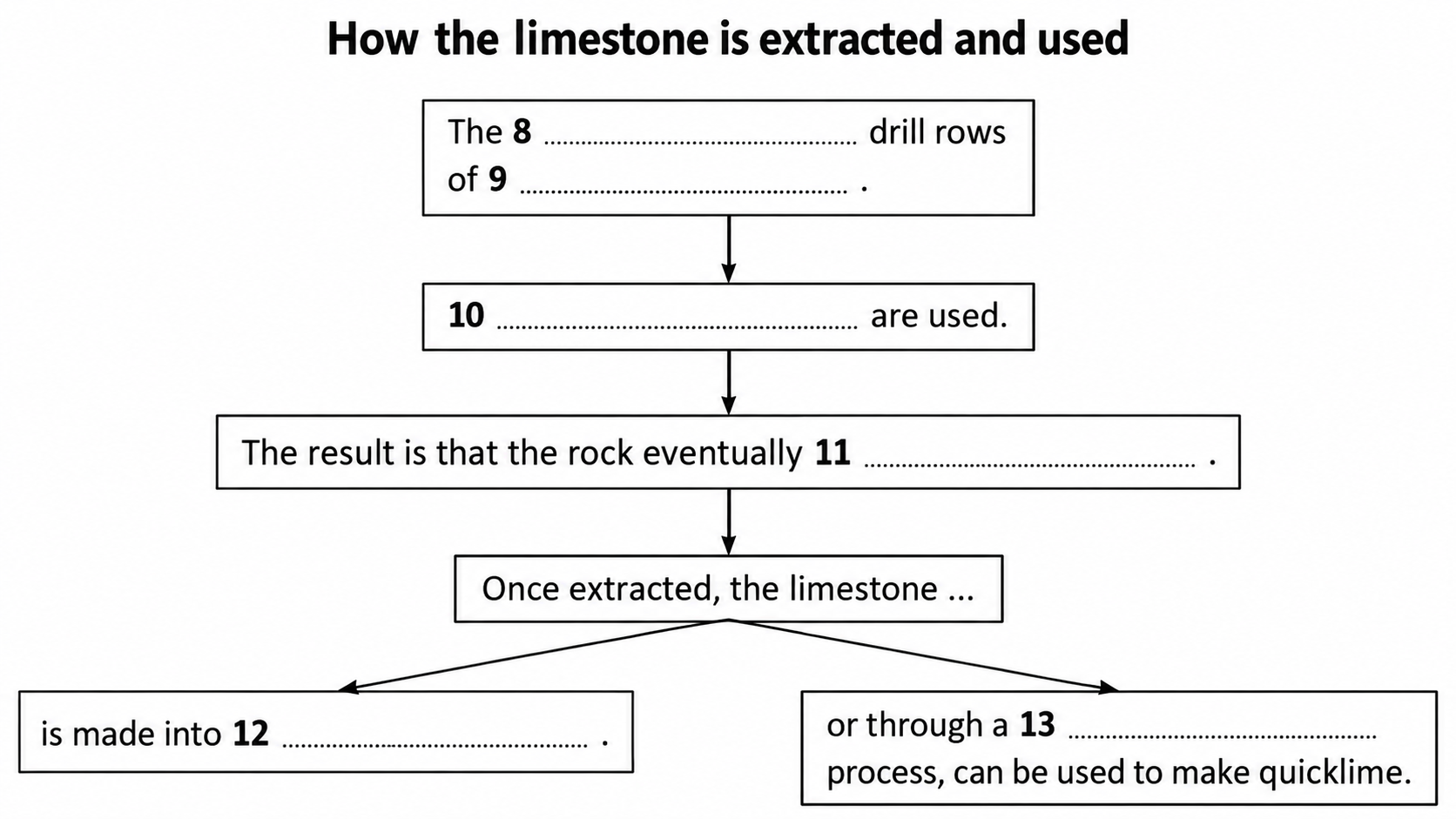
The only major cheat so far was early on when a mechanical earthmover was brought in to raise the castle floor. Archaeologists know how it was done in the 13th century: by backbreaking, tedious work. 'To do it by hand would have added ten years to the project,' says Franck, one of the site's guides. It's still a long, painstaking task. Next to the beginnings of the east wall is the quarry, where masons extract the ferruginous limestone to build the thick castle walls. They bore lines of holes into the rocks and then they hammer metal wedges into them until the rock splits along the line. It is then hewn into bricks, and cemented together with mortar of chalk, sand and quicklime. Quicklime is made by heating limestone to 800°C-done off-site because of the poisonous gases that come from the process. Little wonder that 13th-century lime- burners had a life expectancy of only 25-30 years. 'The bricks are the laid horizontally for the first metre of the wall, and vertically thereafter,' says Franck, 'because if there was a shock from, say, a catapult, and the stones were all laid in the same way, the shockwave would shatter the wall.'

Scientists and craftspeople alike are learning on the job, as they don't know exactly why or how things were done as the historical evidence suggests. One such discovery was the significance of the marks that masons carved into each finished stone. It was thought that these probably had superstitious meaning, but experience and archaeological research reveals three very practical uses: to establish how much each mason should be paid; to keep track of who made what, in case of any problems; and to specify where the stone should be placed in the castle reconstruction.

Guédelon has a scientific committee of archaeologists that discusses ideas and problems as they emerge, and will approve works and practices only when its members are sure that they are true to the 13th century. Reaching unanimity is not always easy. 'All the big plans for the castle itself are all done but the details aren't settled,' says Martin. 'So, during the winter, the site manager and I visit other castles in the region. When we see something we want to do here, we draw a sketch, make plans and show this to the committee.'

The castle will take at least a decade longer to build then it would have in the 13th century. 'With the same number of workers it would have taken 15 years then,' says Franck. 'But we could do this too if we had only professional workers, if the site wasn't open to the public and if we worked harder - today it's illegal to work more than 8 hours a day, as they did at the time.'

Workers come and go but at any one time about 40 people are working on the site. Some are students, others have 'downshifted' from other careers, others are local unemployed people learning skills they might use elsewhere - say, in château restorations around France. They are trained on the site as the need arises, and in the winter they may be trained in modern techniques as part of Guédelon's social remit. So, indeed, what will happen when Guédelon's magical-looking castle is complete? They might build houses around it; perhaps villages may develop, testing out 13th century agricultural techniques. If they can build this castle, anything seems possible.
Questions 1-4
Do the following statements agree with the information given in Reading Passage 1 In boxes 1-4 on your answer sheet, write TRUE if the statement agrees with the information FALSE if the statement contradicts the information NOT GIVEN if there is no information on this
1. One of the reasons for building the castle is to make history more accessible to the general public.
2. Guyot was reluctant to abandon his original idea in favour of a more realistic project.
3. The lime-burners did not live long because their bodies were damaged by the extreme heat.
4. The bricks used to be laid in different ways to lessen the impact of an attack.
Questions 5-7
Choose THREE letters, A-H. Write the correct letters in boxes 5-7 on your answer sheet. The list below gives reasons why the castle may be taking a long time to build. Which THREE reasons are mentioned by the writer of the text?
Questions 8-13
Complete the flow-chart below. Choose NO MORE THAN TWO WORDS from the passage for each answer. Write your answers in boxes 8-13 on your answer sheet.
How the limestone is extracted and used
Diagram
8.
9.
10.
11.
12.
13.

READING PASSAGE 2

You should spend about 20 minutes on Questions 14-26, which are based on Reading Passage 2.

A study of western celebrity

A In our celebrity-obsessed culture, TV shows, internet blogs, and even newspapers are often full of the latest news, gossip and scandals about current celebrities. It seems that our current society cannot get enough information about the daily lives of celebrities. But how did celebrities become so much an important force in our culture? While people have always shared a certain obsession for the fantastic and the famous, the notion of celebrity, as well as the types of people termed 'celebrities', has evolved greatly throughout the ages. The word 'celebrity' has its roots in the language of the ancient Roman civilization. The word we now know to mean 'a condition of being famous' or 'a famous person' is derived from the Latin word 'celeber', meaning 'frequented or populous'.

B The celebrities of the ancient world were the powerful and awesome deities of Greece and Rome, and the citizens of these civilizations believed in a vast number of immortals who had a direct impact on their lives. It was, therefore, important to know about these figures' personal lives. This need to know led to the creation of myths, which personalized the gods and involved them in ancient celebrity scandals that thrilled and excited the common people.

C During ancient times, amateur and professional athletes also began to make an impact on celebrity culture. Victors in the ancient Olympic Games were treated as heroes and were often elevated to god-like status. In the ancient Roman civilization, gladiators - the equivalent of today's professional athletes - were also revered by the common people for their heroics and seemingly superhuman strength.

D As Europe moved into the Dark Ages (the years spanning approximately 400-1300 AD) and a time when athletics and the arts were largely forgotten, monarchs and rulers continued to maintain celebrity status, while religious figures took on newfound fame. The miraculous lives and fascinating deaths of spiritual figures lent excitement to the lives of common people when there was often little else to be excited about, as they faced war, disease and food shortages.

E During the period 1300-1600 AD, or the Renaissance period as it is known, interest in ruling figures faded. As Europe emerged from its long neglect of the arts, there was greater appreciation for portraits, statues and stone carvings. This period of appreciation for the arts lent a sense of celebrity to artists who were noted for their works and their personal achievements. It was a time when artists began to surpass political and religious individuals for supreme celebrity - a trend that would continue into later centuries.

F While the figures of the ancient and early modern civilizations were able to achieve moderate and sometimes lasting celebrity within particular cultures, the global reach of their fame was limited. It was not until the 1700s, when technological advances made publishing commercially viable, that the extent of a person's fame could spread further. The increase in the availability of the written word was accompanied by a huge rise in the number of common people who could read, allowing a mass audience to find out about celebrities for the first time. Suddenly, the lives of authors, politicians, war heroes, and other celebrities could now be read about in newspapers around the world. These gave ordinary people the opportunity to become intimately knowledgeable about the figures they most admired.

G In the modern are, particularly as radio and film took off in the 1900s, things really began to change. First, radio began to make its way into the average home in the 1920s and 1930s. Professional athletes also began to be regarded as stars, as their games and exploits could be broadcast over the air for an entirely new audience. Then, the rise of television in the 1950s only cemented the premier level of celebrity that film stars, athletes and television actors were beginning to share. This also meant a huge increase in the individual salaries of these celebrities. Even a few animals gained fame through children's TV shows. The emergence of reality television shows in the late 1990s allowed all kinds of people with little ability to enjoy a short burst of fame on the television screen. All you needed, it seemed, was an attractive appearance. Today, reality television programmers make it possible to be famous nor for doing anything in particular, but simply for being, with the audience deciding whether someone deserves to become a celebrity or not. As the meaning of celebrity continues to evolve and redefine itself in a quickly changing world, there is no telling who will become of interest next.

Questions 14-20
Reading Passage 2 has seven paragraphs, A-G. Choose the correct heading for each paragraph from the list of headings below. Write the correct number, i-x, in boxes 14-20 on your answer sheet.
List of Headings
i. Why it is necessary to explain the meaning of the word celebrity
ii. The influence of non-human celebrities on societies
iii. The impact of broadcasting on concepts of celebrity
iv. Creativity having greater value
v. Admiration for physical achievement
vi. The advantages of celebrity status in the ancient world
vii. A result of hardship
viii. Literacy and widespread celebrity
ix. Attitudes of celebrities towards the media
x. The original definition of celebrity
14. Paragraph A
15. Paragraph B
16. Paragraph C
17. Paragraph D
18. Paragraph E
19. Paragraph F
20. Paragraph G
Questions 21-23
Look at the following statements (Questions 21-23) and the list of historical periods in Europe below. Match each statement with the correct historical period, A, B, C or D. Write the correct letter, A, B, C or D, in boxes 21-23 on your answer sheet.
List of historical periods in Europe
A. Ancient times
B. Dark Ages
C. Renaissance
D. Modern era
21. A wide variety of people achieve a brief period of fame.
22. Stories are invented about celebrities' lives.
23. The fame of rulers is starting to diminish.
Questions 24-26
Complete the summary below. Choose ONE WORD ONLY from the passage for each answer. Write your answers in boxes 24-26 on your answer sheet.
Celebrities achieve a global status

The development of the publishing industry in the 1700s signalled the beginning of international fame. A growing number of people could read, which meant they had the chance to become informed about their favourite figures by reading 24 . This exposure to celebrities expanded further when radio and television became popular, and it was mass media attention that resulted in higher status and fame for some celebrities. The recent rise of reality television has also meant that a person's 25 rather than their talent can bring fame. With this type of television programme, fame may be entirely dependent on the response of the 26 .

READING PASSAGE 3

You should spend about 20 minutes on Questions 27-40, which are based on Reading Passage 3.

Some views on the use of headphones

Whether wearing headphones at work, or in other areas of everyday life, is a good thing or a bad thing has generated a lot of research and opinion

To visit a typical modern office today is to walk into a room with possibly a dozen songs playing simultaneously but to hear none of them. Up to half of younger workers listen to music on their headphones, and nearly all of them think it makes them better at their jobs. In survey after survey, people report with confidence that music makes them happier, better at concentrating, and more productive.

Scientists do not share this belief, they maintain that listening to music hurts people's ability to recall other things they should be doing, and any pop song, loud or soft, reduces overall performance for both extroverts and introverts. A Taiwanese study linked music that has lyrics to lower marks on concentration tests for college students, and other research has shown music with lyrics scrambles our brains' verbal-processing skills. “As silence has the best overall performance, it would still be advisable that people work in silence,” another reporter dryly concluded.

The question is therefore: if headphones are so bad for productivity, why do so many people at work have them? One factor to consider is that countries like the USA have moved from a farming and manufacturing economy to a service economy, with an emphasis on jobs in offices that require higher levels of concentration, reflection and creativity. As an estimated 70 percent of office workers work in open-plan office spaces, it is more important to create one's own enclosing bubble of sound. Lending strength to the argument for headphones at work is evidence that music relaxes our muscles, improves our mood, and may even moderately reduce blood pressure, heart rate and anxiety.

The story of headphones began in 1910, when the US Navy received an odd letter written in purple ink on blue-and-pink paper. The letter writer, an eccentric inventor and repairman named Nathaniel Baldwin, from the USA state of Utah, made what at the time was an astonishing claim: he had built, in his kitchen, a new kind of headset that could amplify sound. This was an opportune invention for the Navy, who asked for a sound test and then enthusiastically adopted the headsets, later called headphones, and used them in World War I for naval radio communication.

The purpose of headphones is to concentrate a quiet and private sound in the ear of the listener, which is a radical departure from music's social purpose in history. “Music, together with dance, co-evolved biologically and culturally to serve as a technology of social bonding,” Nills L Wallin and Bjorn Merker wrote in The Origins of Music. Songs don't leave behind fossils, but evidence of musical notation dates back to Sumeria, 3,5000 years ago, and in 1995 archeologists discovered a bone flute in southern Europe estimated to be 44,000 years old. If music evolved as a social glue for the species, as a way to make groups and keep them together, headphones have done what writing and literacy did for language - they made music private.

Author and columnist Stephen Marche wrote that separation from other people is one of the first things ordinary Americans spend their money achieving. It is 'a by-product of a long-standing national appetite for independence,' he said. Americans are not alone in their desire for personal independence and privacy. Marche is right; wealth can buy - and modern technology can deliver - personal independence, and it is this that people have always sought.

Dr Michael Bull, an expert on personal music devices from the University of Sussex in the UK, has repeatedly made the larger point that personal music devices change how we relate to public spaces. Controlling our public spaces is more important now that more people are moving from the edges of cities to live in urban centers. “With the urban space, the more it's inhabited, the safer you feel,” Bull says. “You feel safe if you can feel people there, but you don't want to interact with them.' Headphones create shields for wearers, separating them from other people and their surroundings. Headphones have their own rules of good manners; they are like wearing a 'Do not disturb' sign. We assume that people wearing them are busy and we should respect their privacy, so now people wear them to appear busy.

In fact, it is now becoming quite common for people not to listen to anything at all, but just to wear headphones. However, as pointed out at the beginning of this piece, although scientists have stated that headphones are bad for productivity, people still wear them at work. It is not just that headphones create privacy out of public areas, but also that music causes people to relax and reflect and pause. The outcome of relaxation, reflection and pausing at work won't be captured in minute-to-minute productivity metrics. What must be considered is that in moments of extreme focus, our attention radiates outward, toward the problem, rather than inward, on how to solve the problem. However, with music, “When our minds are at ease, we're more likely to direct the spotlight of attention inward,” Jonah Lehrer wrote in his book Imagine: How Creativity Works. “The answers have been there all along. We just weren't listening.” In a crowded world, real estate is the ultimate scarce resource, and a headphone is a small invisible fence around our minds - making space, creating separation, and helping us listen to ourselves.

Questions 27-31
Do the following statements agree with the claims of the writer in Reading Passage 3? In boxes 27-31 on your answer sheet, write YES if the statement agrees with the claims of the writer NO if the statement contradicts the claims of the writer NOT GIVEN if it is impossible to say what the writer thinks about this
27. Young people are easily persuaded by surveys that listening to music is beneficial.
28. Different studies share the same conclusions about the desirability of working in silence.
29. Some doctors recommend wearing headphones to lower blood pressure.
30. Nathaniel Baldwin was a respected government researcher.
31. The effect of the invention of headphones is comparable to the effect of the invention of writing.
Questions 32-36
Choose the correct letter, A, B, C or D. Write the correct letter in boxes 32-36 on your answer sheet.
32. What does the writer suggest about a service economy?
33. When the writer mentions the historical evidence for early music he is
34. What does the writer say about the social effects of listening to music through headphones?
35. What does the writer say about personal independence?
36. Why does the writer quote Jonah Lehrer in the last paragraph?
Questions 37-40
Complete the summary using the list of words, A-I, below. Write the correct letter, A-I, in boxes 37-40 on your answer sheet.
Headphones and city living
Options
A courtesy
B relationship
C difficulty
D countryside
E suburbs
F language
G barriers
H obstacles
I disapproval

Dr Michael Bull believes that listening to music through headphones has changed the 37 the wearers of headphones have with public spaces. Living in the centre of cities is becoming popular, as people become less keen on living in the 38 . In densely populated city centres, headphones form 39 that isolate people from fellow citizens and from their environment. Wearers of headphones are treated with 40 that other people do not receive. This is because if we see someone wearing headphones, we believe they must be occupied in some way and should not be interrupted.

Reading – Real Tests Vol 4 – Test 6 – IELTS 7+ Cấp Tốc & Giao tiếp
Thành phần của mẫu đã bị xóa hoặc không khả dụng: header
Thành phần của mẫu đã bị xóa hoặc không khả dụng: footer